
Why I Love Curating Library Displays
Finding My Niche
There’s a term in Japanese, isshōkenmei, that (as far as I understand it) means to devote yourself whole-heartedly to your work, no matter what that work may be. I take this approach in all aspects of my career as a library professional, but especially in putting together book and media displays. Whether my displays impact one person or one thousand, I always put 100% of my effort into what I do and take pride in my labor.
Displays are the under-appreciated “bread and butter” of many libraries, archives, and other cultural institutions. They’re often situated in high-visibility or high-traffic areas of the building, presenting a great chance to capture patrons’ attention and drive further engagement. The act of curation also provides an opportunity for staff to exercise creative control and highlight books that need attention.
My Approach to Curation
I’ve found that my experience curating museum exhibits gives me an interesting perspective on how to make library displays that are visually appealing, informational, and supportive of the organization’s overall goals. Whether you want to promote local authors, reach a new population in your community, of simply increase overall circulation, displays are an excellent low-barrier entry point.
I don’t want to give all of my secrets away here, because I want people to buy my book! Having said that, here are some of the basic principles underlying my work as a display curator, which I just have to share:
Use displays as a chance to get eyes on under-circulated items in your collection. If your theme is athletics, there are undoubtedly plenty of sports books and movies in storage, just waiting for someone to check them out. Show them some love!
Try to include a variety of materials, to reach a variety of patrons. This means putting out books of varying reading levels, from multiple genres, and in several formats (i.e. audiobooks, large print, and videos, as well as traditional print books). I nearly always present nonfiction alongside fiction, unless it would confuse the display theme. If you can put out items for adults, teens, and children simultaneously, do it. Multigenerational displays are convenient and interesting for patrons and break down departmental barriers.
This isn’t about YOU, it’s about YOUR VISITORS. Go ahead and display books that you don’t particularly like and authors you don’t necessarily agree with. The idea of displays is to connect readers with books (or movies or artwork…), not to foist your tastes on everyone else. If it’s helpful, think of displayed items as suggestions, rather than recommendations. It’s the subtle difference between “OMG, you should read this” versus “Have you thought about…?”
All of your patrons deserve the full library experience, so ask yourself: does this display require people to bend, reach, read fine print, or otherwise perform actions that may not be available to every body? How might you incorporate adjustments to make this display more accessible?
Be mindful that your display is sending unspoken messages about your organization’s values and priorities, just in the way it’s laid out and the materials that are included. Featuring stories and authors of many different backgrounds (including race, disability status, sexual orientation, and cultural identity) gives all readers a chance to see themselves reflected in the library experience.
Aesthetics are not frivolous. A display that is well organized and attractive to look at will attract more patrons. In fact, the field of gestalt psychology tells us that people are drawn to, and better understand, groups of items items that are sensibly arranged, rather than chaotic and cluttered.
Finally, don’t be afraid to spice it up with interpretive content. In museums, interpretation refers to the signs, labels, audio guides, images, etc. that help visitors understand what they’re seeing. Interpretation is absolutely integral to museum exhibits; I’ve brought this practice into my library practice by sprinkling interpretive elements into almost all of my displays. Interpretation can be as simple as a timeline, fun facts, or famous quotes. What do you want patrons to understand, that they won’t “get” just by looking at books on easels?
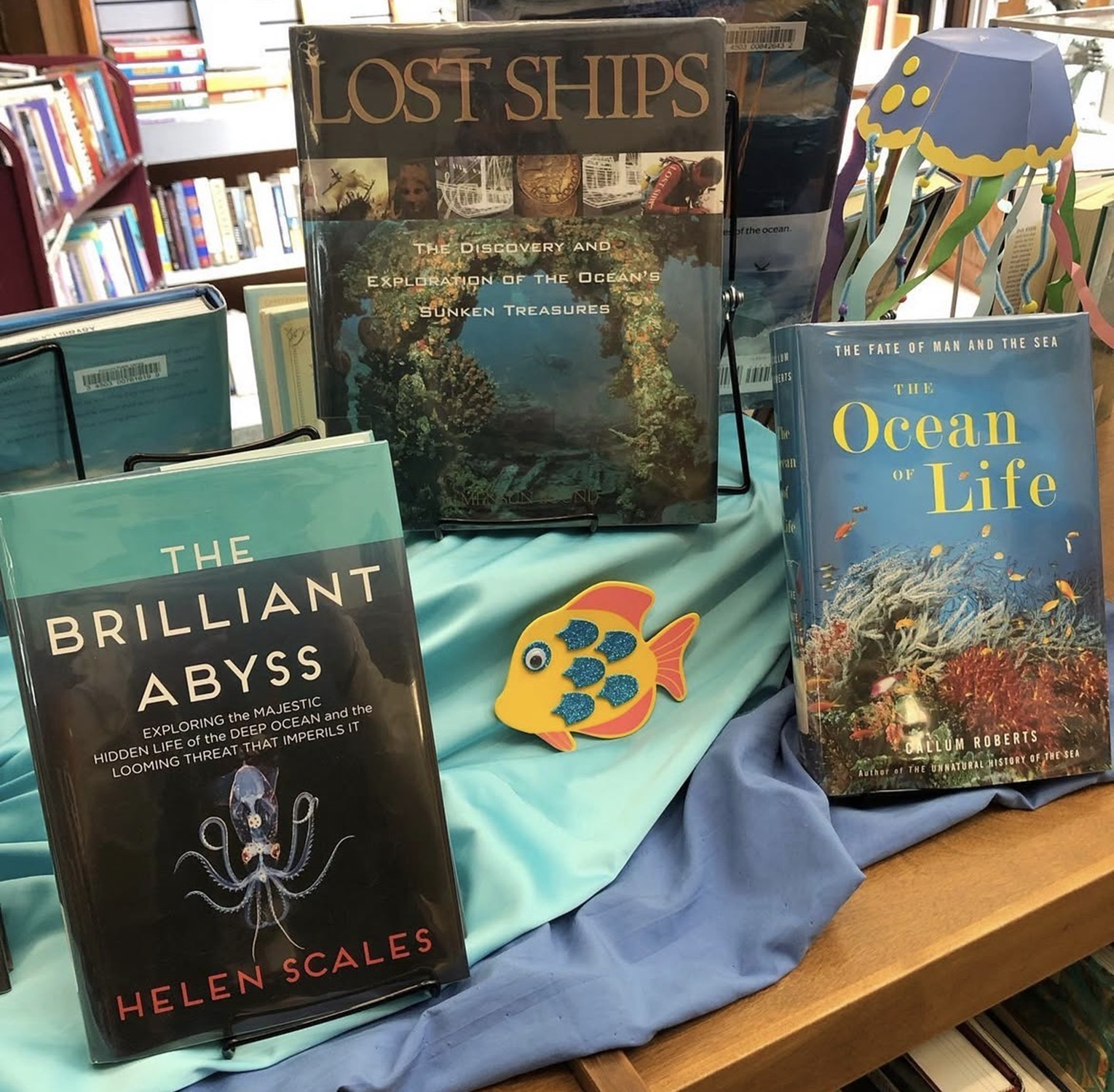
With a few Dollar Store props and bolts of discount fabric, I created an ocean-like aesthetic that drew in patrons and added tons of panache to this “Under the Sea” display.
Bringing it Home
In conclusion, I didn’t go looking to become “the display lady,” but it’s where my talents led me. Since I believe that knowledge is meant to be shared, I’ll be publishing many more articles in the future about creating excellent displays. I’m not afraid to share things that didn’t work, alongside all of my successes. Part of practicing a growth mindset is understanding that there’s always room for improvement, and failures aren’t a reason for shame unless you don’t learn from them.
Thanks for reading my first blog post as FML Books!